


Featured Product

Project Type
Key Points
System Description
ETRA SpA Sb operates a drinking water network serving almost 600,000 residents across Northern Italy (roughly 1,700 km²). Their 5,400 km network includes aging infrastructure in varied environmental conditions. The multiutility aimed to modernize its asset management approach across its Ambito region. The project focused on assessing pipe condition, evaluating risks, and optimizing renewal strategies in a representative regional section of the system.
Purpose
The primary challenges the utility was facing were infrastructure degradation, increasing of leak & burst repair costs and of non-revenue water volumes.
Regulatory pressures, such as the PNRR (Italy’s adaptation of the NextGenerationEU plan), emphasized the need for modernization through digital solutions. ETRA responded through strategic, risk-informed renewal planning that could justify and guide efficient capital investment.
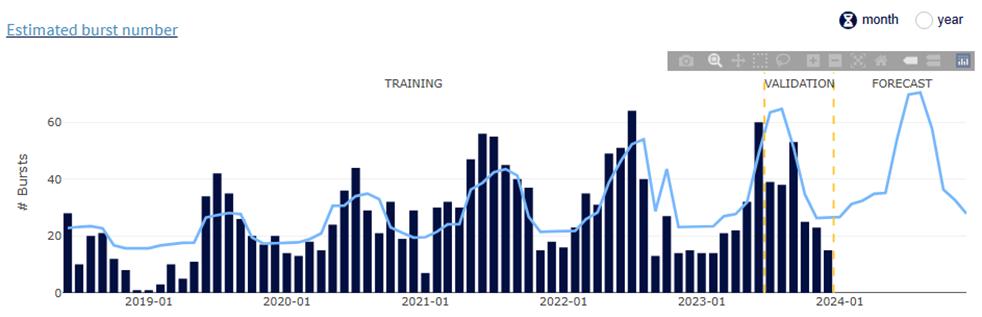
Results of Likelihood of Failure model compared to historical data of pipe bursts
Highlights
Project Scope
SUEZ Italy, SUEZ CIRSEE Research Center and Optimatics delivered a pilot using AssetAdvanced to create a comprehensive pipeline condition assessment and risk-based planning initiative.
The foundation of the project began with a physical and environmental diagnostics program including 80 soil and pipe samples, water quality analysis, pressure monitoring, and targeted inspections—with AI-driven modeling.
A Likelihood of Failure (LoF) model incorporated asset, operational (leaks and pressure), and environmental data, while a Consequence of Failure (CoF) model was co-developed with Etra to prioritize critical risk factors. These models were integrated into the AssetAdvanced Planning and Prioritization (P&P) module to evaluate over 100,000 renewal scenarios, optimizing investment plans for maximum risk reduction, cost efficiency, and alignment with regional infrastructure priorities.
Likelihood of Failure Modelling
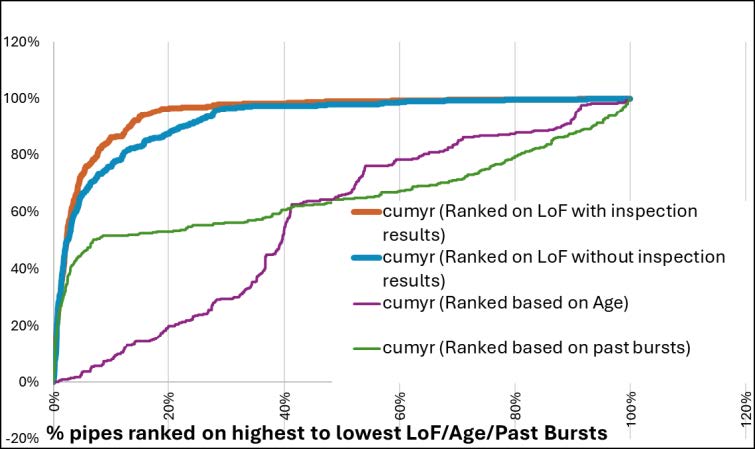
The model correctly identified 71% of historical breaks within the top 5% of high-risk pipes. In comparison, a model without inspection data achieved 64%, ranking by age alone captured only 3%, and ranking by past breaks captured 46%.
Outcomes
The study (phase 1) modeled 3,008 km and achieved high predictive accuracy in 2023. The top 5% of pipes by LoF accounted for 71% of past failures, far outperforming age or burst-based models. With stakeholder input, the CoF model was tailored to reflect ETRA’s context and priorities.
From all scenarios achieved with P&P, an optimized plan removed 6% of network risk, while a manually developed plan only 1% on a similar range of investment (€5M). The most optimal plans on a €10M range were refined and used as input to build final replacement projects.
This data-driven, risk-based approach enhances resilience, optimizes investment, and establishes a scalable methodology for future phases.
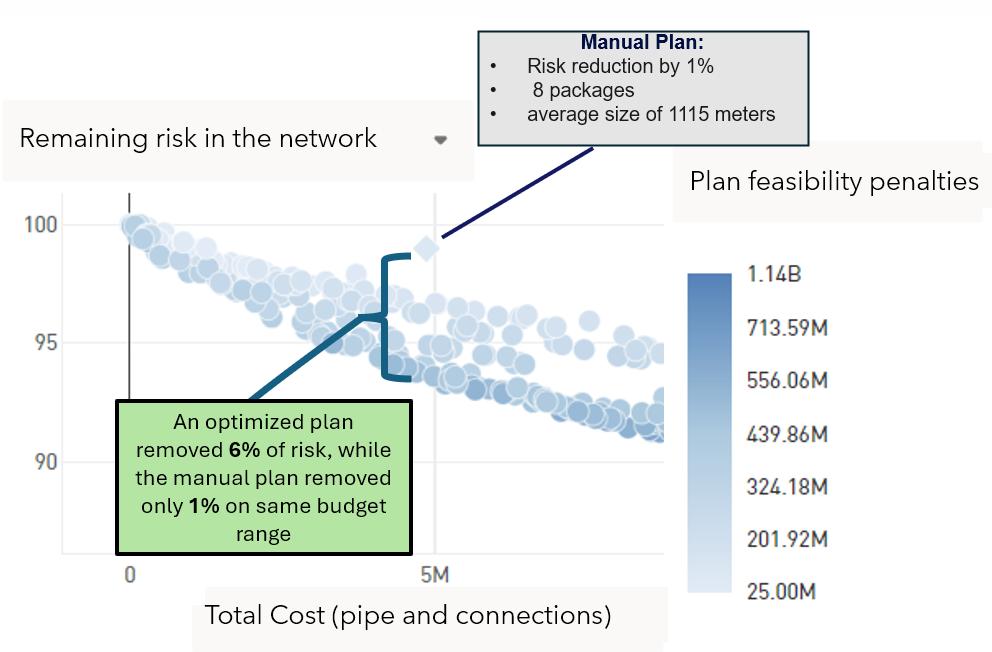
Scenarios of plans built and compared in the platform