

Featured Product

Project Type
SABESP piloted AssetAdvanced CleanWater to improve how water main replacements are planned and prioritized across multiple networks. The pilot demonstrated reduced risk, lower operational costs, and more effective use of replacement budgets.
Key Points
Purpose
SABESP is the largest sanitation company in Brazil and provides water services to around 30 million people across the state of São Paulo. The Utility performs routine operational and emergency mains replacements alongside an existing program that manually identifies and replaces high-risk pipes to prevent leaks and maintain a consistent supply. Existing planning methods relied heavily on manual assessments and experience, which made it difficult to consistently balance system risk reduction, operational costs (OPEX), and capital investment (CAPEX).
The purpose of the six-month pilot was to evaluate how SABESP can modernize asset planning using an AI- and machine-learning-based platform to analyze asset data and optimize replacement projects that balance Risk, OPEX and CAPEX investments, ensuring optimal and data-driven decision-making to reduce pipe breaks.
System Description
The pilot focused on three water distribution systems across three separate regions that serve dense urban areas in the state of São Paulo. Approximately 50,000 pipes were included in the pilot (highlighted in Figure), representing around 2,000 kilometers of network.
AssetAdvanced CleanWater used existing network data, historical maintenance records, and open-source data to predict where breaks were most likely to occur and where they would have the greatest impact. This information was combined with repair and replacement cost data to inform replacement planning.
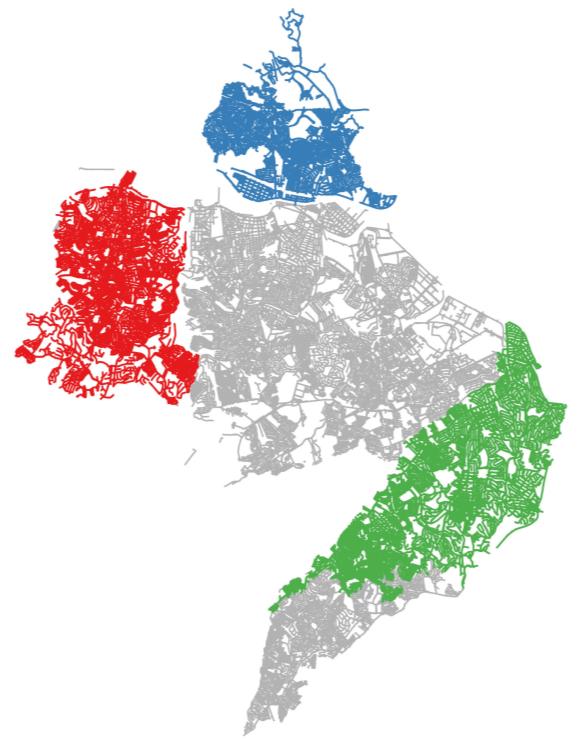
A map of Networks Included in Study
Project Scope
The pilot began with Likelihood of Failure (LoF) analysis leveraging Machine Learning (ML) models that use pipe attributes (diameter, length, age, etc.), open data (e.g., road type), network hydraulics (pressure), and maintenance history to predict future pipe breaks. A novel multi-criteria criticality analysis, considering Network Hydraulics, Serviceability, Accessibility, and Cost, was used to assess the Consequences of Failure (CoF) of those breaks for a comprehensive risk categorization. Using this risk information, the Packaging and Prioritization (P&P) optimization module was then used to generate optimized, construction-ready replacement projects that balance multiple objectives. Target replacement lengths were defined for each region to reflect budget and operational constraints.
Outcomes
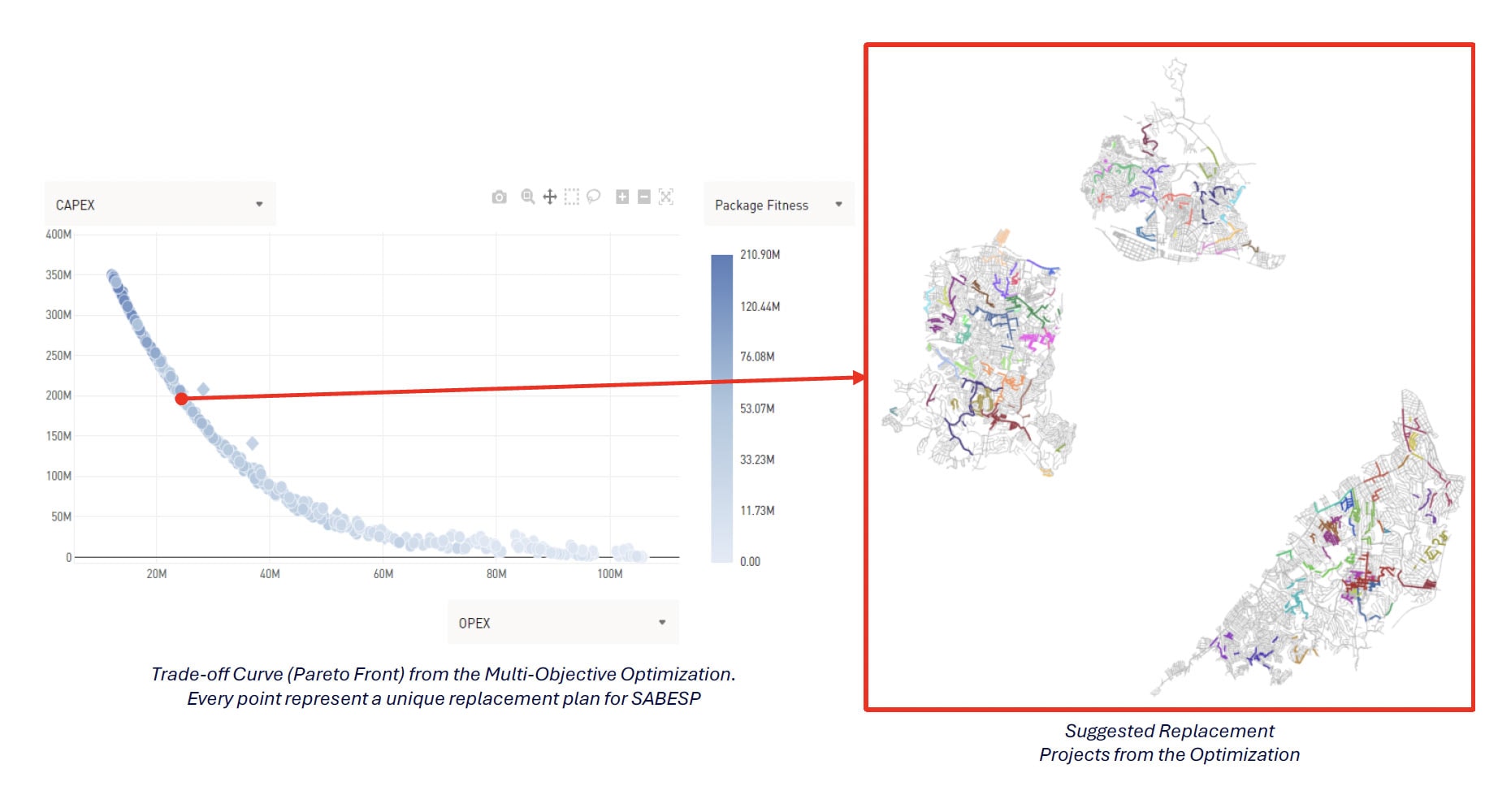
Utilizing AssetAdvanced platform, the pilot successfully delivered an optimized one-year replacement plan of highest priority pipes to minimize OPEX cost due to leaks which allows for more pipe replacements (CAPEX) while maintaining an efficient project packaging strategy. The final optimization evaluated a total of around 200,000 different replacement plans before a final solution/plan was selected.
Optimized replacement plans consistently outperformed manual packaging of pipes in risk order. Across all three regions, for a similar CAPEX cost, optimized plans targeted approximately 18% more pipes (by length) and around 13% larger number of potential breaks, resulting in 15% reduction in OPEX cost. These operational savings created opportunities for additional pipe replacement and further improvements in network performance.
In summary, the pilot demonstrated that a data-driven, AI-based approach can significantly improve how pipe replacement programs are planned and prioritized, generating significant operational and investment savings for the utility while minimizing risk of pipe failures to prevent breaks and maintain a consistent supply. AssetAdvanced proved to be a powerful, scalable decision-support platform capable of transforming SABESP’s asset management strategy and enhancing water service continuity for millions of people.